

Smart Lock Installation in Austin
A keypad or app-controlled deadbolt means no more keys under the mat, codes for the dog walker and a way to tell whether the kids locked up. Fitted well, the bolt throws cleanly and the batteries last.
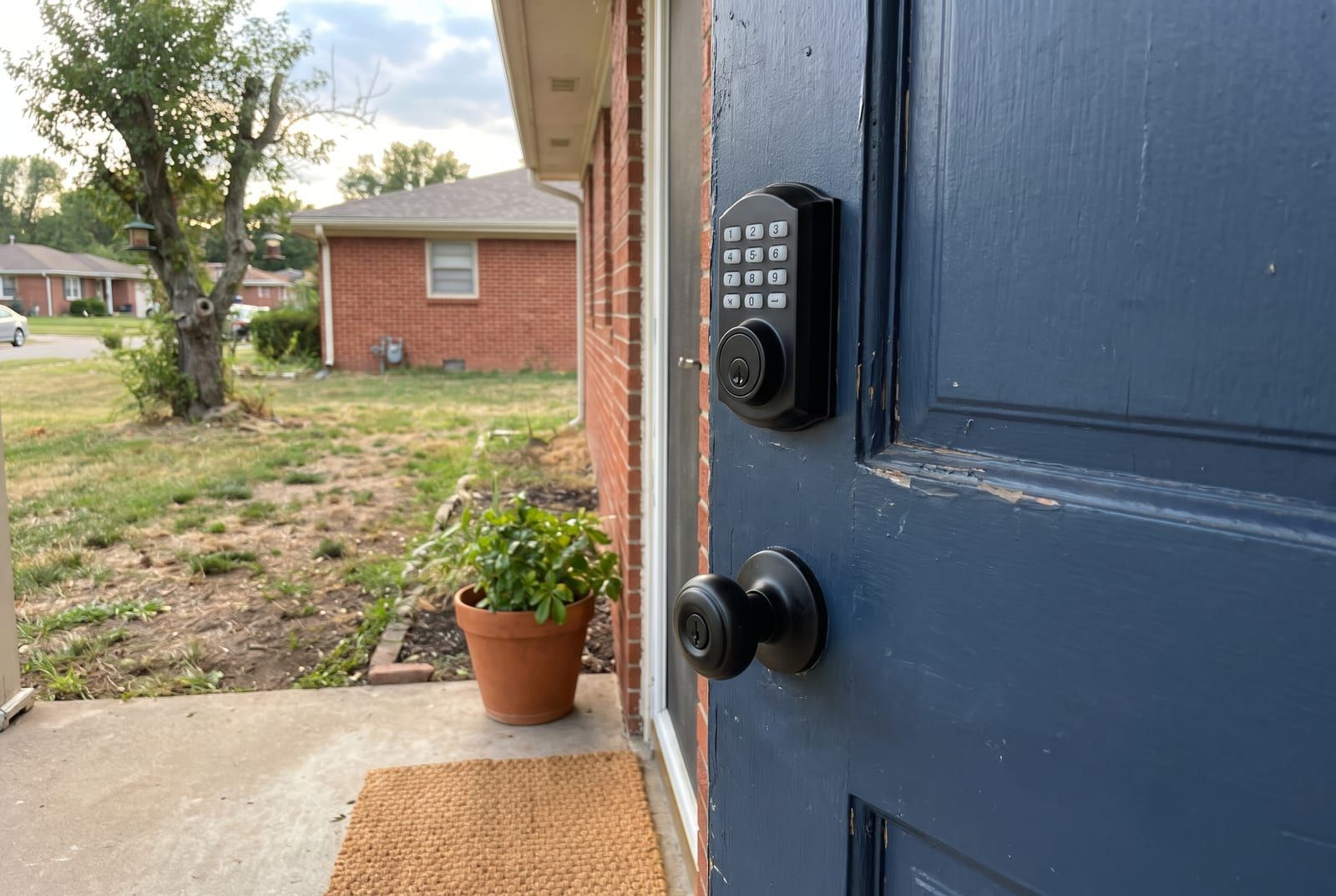
Kinds of Electronic Locks
“Smart lock” covers several different things. The right one depends on how many people come and go, and how much you want to manage from your phone.
Swipe sideways to see every column.
| Type | How it unlocks | Power source | Things to consider |
|---|---|---|---|
| Keypad deadbolt | A code on the keypad, plus a key | AA batteries | Simple, no app; change codes at the lock |
| Bluetooth smart deadbolt | Phone nearby, keypad or key | AA batteries | Works without Wi-Fi; no remote access on its own |
| Wi-Fi smart deadbolt | Phone from anywhere, keypad, key | AA or a rechargeable pack | Remote alerts and access; batteries drain faster |
| Retrofit smart lock | Phone; your existing key still works outside | Batteries | Fits over the inside of your current deadbolt |
| Smart lever or handleset | Code or phone, with a lever or grip | Batteries | Needs matching holes and a sturdy door |
Will It Fit Your Door?
Measure the door before you buy. Open it and measure its thickness at the edge, the width of the round hole through the face where the deadbolt sits, and the distance from the door’s edge to the center of that hole (the backset).
Door-Fit Guide
Pick the closest match for each. Not sure? Choose “not sure” and we’ll measure on the visit.
Choose your door’s measurements above, then press “Check My Door.”
Fitting It So It Lasts
Most smart-lock trouble isn’t electronic. When the bolt has to scrape past a strike plate that sits a little high, the motor works harder on every lock and unlock, and batteries that should last most of a year are gone in a couple of months. So before a smart deadbolt goes on, we check that the door closes square and that the bolt slides into the strike without touching. Then we fit the lock, set it up with you, and test it with the door shut, the way you’ll use it every day.
Austin’s summer heat matters here too. A lock on a door that takes the afternoon sun runs hot, and batteries don’t love it. On a west-facing door, lithium batteries and a model with a good temperature rating are worth the small extra cost. Comparing keyed, keypad and smart locks side by side? See the lock comparison.
Smart Lock Questions
What happens when the batteries die?
You won’t be locked out without warning. Most keypad and smart deadbolts start flashing or chirping weeks before the batteries are done, and the app, if there is one, sends a reminder. Many also have two terminals under the keypad where a 9-volt battery held against them powers the lock long enough to enter your code. And most models keep a key cylinder for exactly this moment.
Should I keep a key backup?
Yes. A key cylinder, or at least a physical override, covers dead batteries, a failed keypad and the day the phone is at the bottom of a bag. If you choose a model without one, keep a second way into the house, such as a keyed back door.
Wi-Fi or Bluetooth: which is better?
Bluetooth locks talk to your phone only when you’re standing near the door, and they go easier on batteries. Wi-Fi locks, or Bluetooth locks with a plug-in bridge, let you check and unlock the door from anywhere and send alerts, at the cost of shorter battery life and one more device on your network. If you just want to stop carrying keys, a plain keypad does the job without either.
Will a smart lock fit my door?
Most fit a standard residential door with a 2-1/8-inch bore and a 2-3/8 or 2-3/4-inch backset. Thick doors, metal-framed glass doors and doors with a mortise lock need a closer look. The door-fit guide on this page gives you a first answer.