
Lock Installation & Repair in Austin
New locks fitted to the doors you have, and tired ones brought back into working order. On a stubborn lock, the door gets checked first, because a sagging door or a strike plate out of line can look just like a failing lock.
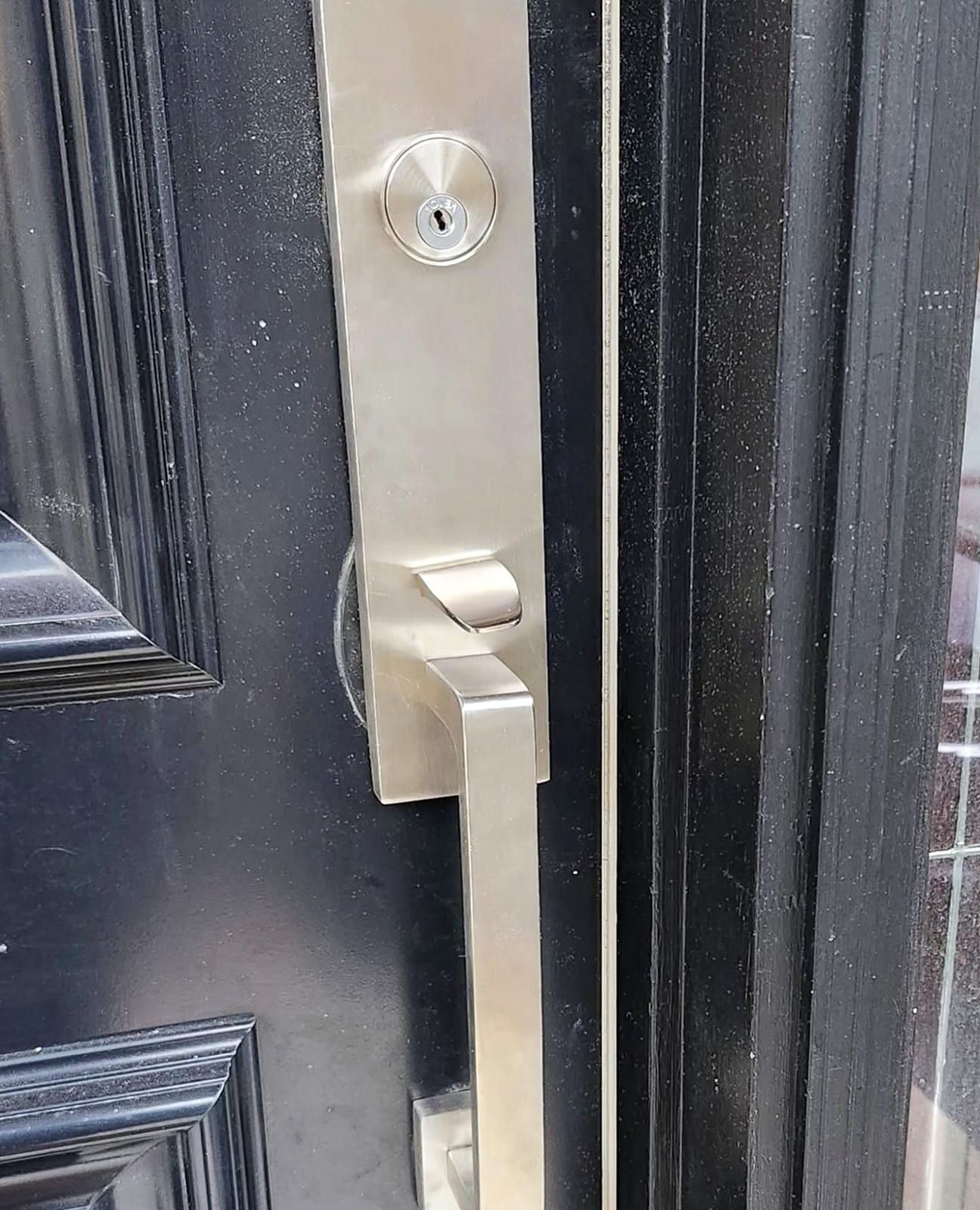
Check the Door Before Blaming the Lock
A good share of “broken lock” calls turn out to be door problems. When a door drops a little on its hinges, the bolt no longer meets the hole in the strike plate squarely. You feel it as a deadbolt that needs a shove on the door before it will turn, or a latch that only catches if you slam it. Swap the lock and the new one will do exactly the same thing.
Around Austin this is common. The clay soil under many houses shrinks in a dry summer and swells again after heavy rain, and as the foundation shifts the doors go a little out of square. Tightening hinge screws, setting longer screws into the framing or moving the strike plate is often all it takes. When it isn’t, you’ll know why we’re recommending a new lock.
Hardware We Fit and Repair
Swipe sideways to see every column.
| Hardware | Where it is used | What to consider | Common problems |
|---|---|---|---|
| Single-cylinder deadbolt | Front, back and garage-entry doors | A full 1-inch throw and a reinforced strike with long screws | Bolt drags on the strike, key turns stiffly |
| Knob or lever lockset | Entry doors paired with a deadbolt, interior doors | Levers are easier for small hands and full arms | Loose handle, latch that won’t retract |
| Handleset | Front doors where looks matter | Needs the right holes and a sturdy door | Thumb latch sticking, loose grip |
| Mortise lock | Older homes and some commercial doors | Usually worth repairing rather than replacing | Worn springs, a cylinder that spins |
| Keypad or smart deadbolt | Families, rentals, frequent guests | Door thickness, battery access, a key backup | Bolt binding drains batteries |
| Patio and sliding door locks | Back patios and side yards | A secondary bar or pin lock helps a lot | Latch misses its keeper as the door wears |
Signs a Lock Needs Repair or Replacing
- The key sticks, catches halfway or has to be jiggled before it turns.
- A handle or knob is loose, droops or spins without moving the latch.
- The deadbolt won’t throw all the way unless you push or lift the door.
- There’s damage after a break-in attempt: pry marks, a split frame, a bent bolt.
- The finish is flaking and the cylinder face is pitted from years of sun and rain.
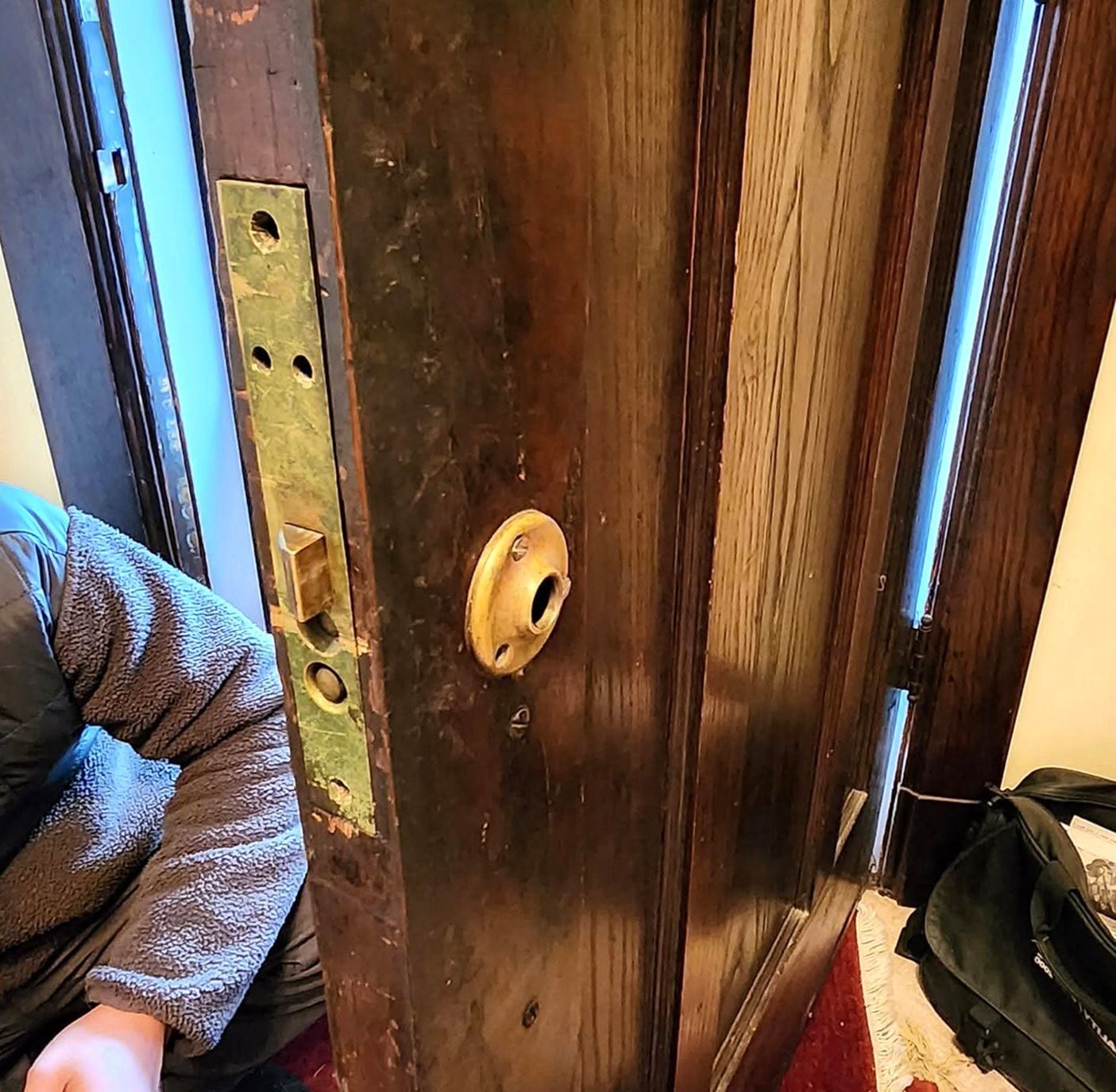
Old mortise locks like the one above are a good example of repair over replacement. Once the trim comes off, the case can be opened, the springs and lever checked and the cylinder reset, and the door keeps the hardware it was built around.
What a Visit Looks Like
We look at the door and the lock together, tell you what we found and give you the estimate before any work starts. If it’s a new lock, you choose the style and finish; if it’s a repair, you’ll hear whether the part is worth saving. When the work is finished we test the lock with the door open and closed, sweep up the shavings and pack away the old hardware.
Want to compare lock types first? The lock comparison lays out the trade-offs side by side.
Questions About Installation and Repair
Is it worth repairing an old lock?
Often it is. Older mortise locks and solid brass deadbolts were built to be taken apart, cleaned and adjusted, and many have years left in them. A cheap lock with a cracked housing or a stripped spindle is a different story: replacing it usually costs less than chasing parts.
Can a new lock go on my existing door without new holes?
Most residential locks in the U.S. use the same standard holes: a 2-1/8-inch bore through the face of the door and a 1-inch hole in the edge, set at a 2-3/8 or 2-3/4-inch backset. If your door already has those, a new deadbolt or knob usually drops right in. Handlesets, mortise locks and some decorative sets need different holes, and we’ll look before recommending one.
My key only goes in halfway. Is the lock broken?
Not necessarily. Dirt, a bent key, a worn duplicate or a pin that has stuck can all stop a key partway. Don’t force it or spray oil into it. Try your original key if you have one, and if that doesn’t go in either, call before the key snaps in the cylinder.
Can you match the finish on my other hardware?
Usually. Most locks come in the common finishes, such as satin nickel, oil-rubbed bronze, matte black and polished brass, so a new lock can match the hinges and the rest of the doors instead of standing out.