

Lock Maintenance Guide for Austin Homes
Locks don’t need much, but they do need something. A few minutes a season keeps keys turning smoothly and catches the small problems before they become a lockout.
Season by Season
Central Texas is hard on doors in its own way: long hot summers, sudden wet spells, a lot of spring pollen and dust, storms and, every so often, a hard freeze. Here’s what each one does to locks and what to do about it.
| Season | Task | Parts affected | Why it matters |
|---|---|---|---|
| Summer heat | Check that the deadbolt throws without pushing the door | Bolt, strike plate, smart-lock batteries | Doors move as foundations dry out, and heat shortens battery life |
| Humid spells | Work every lock a few times; note any that drag | Latches, wood doors and frames | Swollen doors push latches against their strikes |
| Spring pollen and dust | Wipe keys, puff dry lubricant into the keyways | Pins and keyways | Fine grit packs into the pins and makes keys catch |
| Storm season | Check weatherstripping, look for rust on exterior locks | Exterior cylinders, screws, strike plates | Wind-driven rain gets into locks that face the weather |
| Occasional winter freeze | Keep a de-icer handy for gates and padlocks; never use hot water | Padlocks, gate locks, outdoor keyways | Water left inside a lock can freeze and stop the key |
A Month-by-Month Reminder List
Pick the lines that match the doors you have and put them on the calendar.
Front and Back Doors
- March: wipe the keys, dry-lube every keyway after the worst of the pollen.
- June: check that the deadbolts throw fully with the door closed.
- September: tighten loose handle and strike-plate screws.
- December: look over exterior locks for rust and stiff keys before a cold snap.
Keypad and Smart Locks
- Every three months: check the battery level in the app or on the lock.
- Before summer: swap in fresh batteries on doors that take the afternoon sun.
- Whenever someone moves out: delete their code or app access.
Gates, Sheds and Padlocks
- Spring: clear spider webs and grit from padlock shackles and gate latches.
- Late fall: dry-lube padlocks and turn them face-down so water drains out.
Quarterly Lock Check
- Every exterior deadbolt throws its full length with the door shut.
- Keys go in and turn without jiggling.
- Handles and knobs are tight, with no wobble.
- Strike plates sit flush and their screws are snug.
- Sliding-door latches catch the first time.
- Keypad batteries show more than a quarter left.
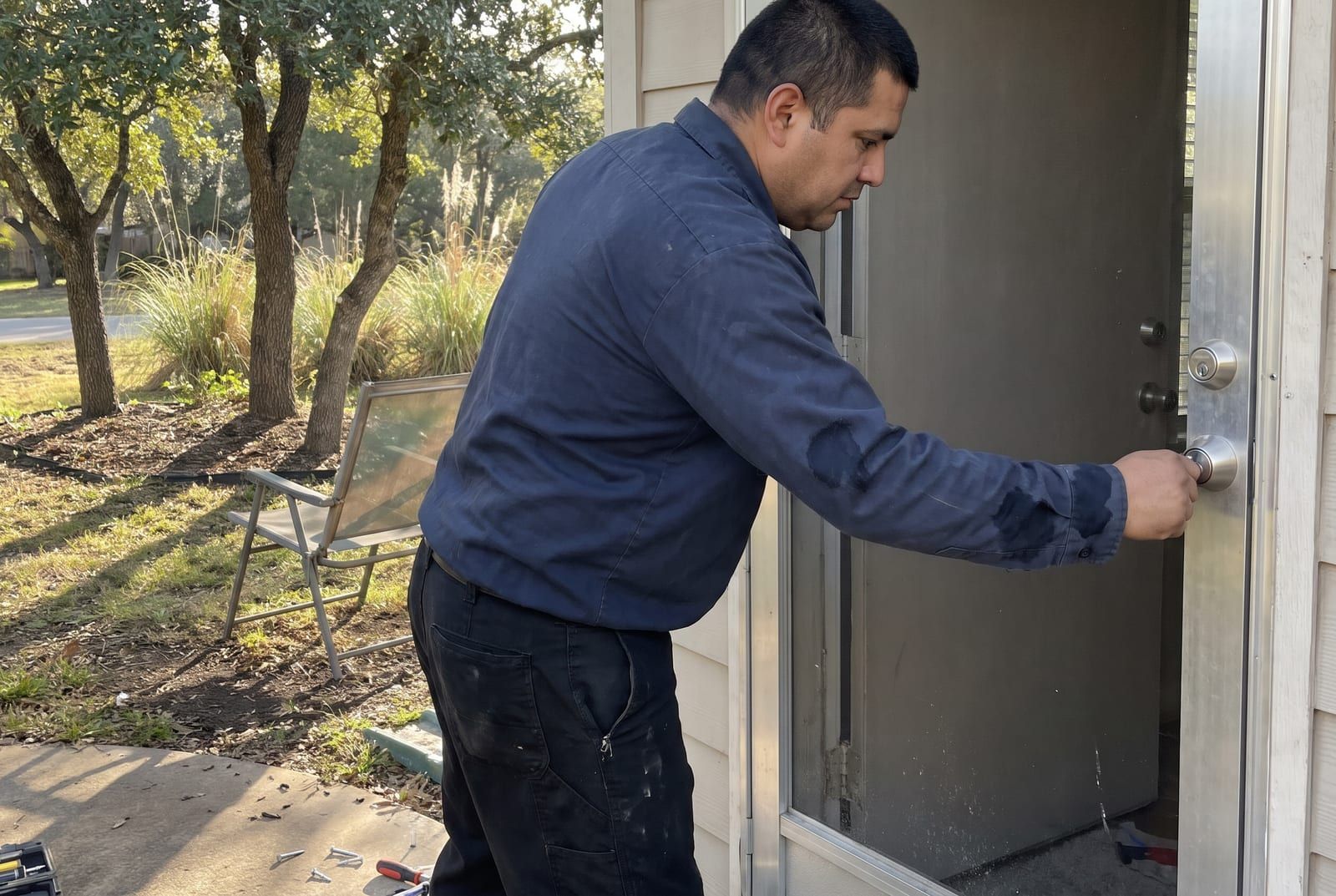
Anything that fails the check twice in a row is worth a visit. Locks rarely fail all at once; they get a little harder to use until the day they don’t open. If one of yours is heading that way, see installation and repair for what a fix involves.
Lubricants and Sticking Keys
What should I put in a sticky lock?
A dry lubricant: powdered graphite or a dry PTFE spray made for locks. Puff or spray a little into the keyway, work the key in and out a few times, and wipe the key. Skip oils and general-purpose sprays; they feel great for a week, then collect dust and pollen into a paste that makes the lock worse.
Why does my key stick only some of the time?
When it changes with the weather, it’s usually the door, not the lock. Wood swells in humid spells and shrinks in dry heat, and foundations move with the clay soil, so the bolt meets the strike plate a little differently from month to month. If the key turns easily with the door open but fights you with it closed, that’s the sign.
My key is worn smooth. Does that matter?
Yes. A worn key, or a copy of a copy, no longer lifts the pins to quite the right height, and it wears the lock as it goes. Have a fresh key cut from the original if you still have it; if you don’t, rekeying gives you a clean start.
How often should a lock be serviced?
A quick look and a puff of dry lubricant once a season is plenty for most homes. A lock that still sticks after that needs a closer look, not more lubricant.