

Our Approach to Lock Work
Every job, from a single rekey to a houseful of new deadbolts, goes the same four ways. And because doors are also the way out of a building, a few safety and code rules shape what can go where.
How a Job Goes
Assessment
We start with the door, not the lock. Does it close square? Does the bolt meet the strike plate without dragging? Are the hinges tight? A lot of locks that feel broken are fine on a door that has moved, so this first look decides what the rest of the visit is about.
The Options
Next you hear what we found and what can be done about it: adjust the door, repair the lock, rekey it or replace it, and what each one involves. You get the estimate before we start, so the cost is known up front and the choice stays yours. If the job falls outside our work, you’ll hear that too, along with the name of a locksmith we trust for it.
The Work
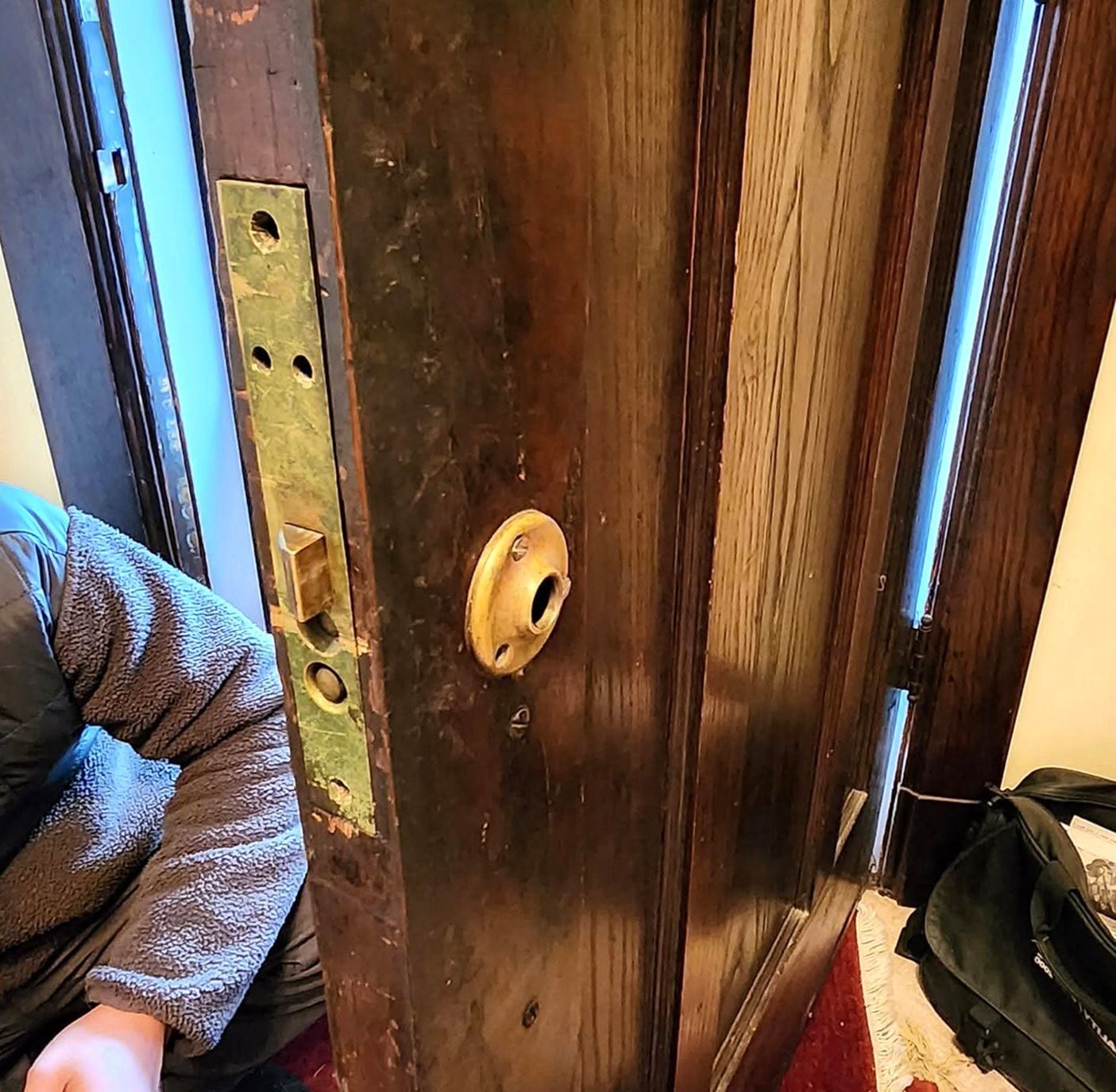
Then the actual job: pins changed, a lock fitted, a strike moved or a mortise lock taken apart and put back together. Old hardware you’re replacing gets packed away, and the shavings from boring or rekeying get swept up rather than left on your entry rug.
Testing
Last, every lock gets worked with the door open and with it shut, each key tried in each lock, and smart locks set up and tried with you. A lock that works on an open door but fights on a closed one isn’t finished.
Safety and Code Rules That Shape Lock Work
Locks keep people out, but doors also have to let people out. These are the rule areas that decide what hardware a door can take.
| Rule area | What it covers | Where it applies |
|---|---|---|
| Fire-rated doors | Doors and hardware tested to hold back fire; only rated hardware may be fitted, and the door must latch on its own | Stairwells, corridors, garage-to-house doors in some buildings |
| Emergency egress and panic hardware | Exit doors must open from inside in one motion without a key; larger rooms need push bars | Businesses, assembly spaces, apartment exits |
| Accessible hardware | Hardware usable without tight grasping or twisting, such as levers, at reachable heights | Public and commercial spaces, accessible units |
| Key control | Who holds keys, and rekeying between occupants | Texas rentals, offices, managed properties |
| Residential versus commercial | Houses have few lock rules; rentals and businesses have more | Every job, decided before hardware is chosen |
This is a general guide, not legal advice. Austin adopts the international building and fire codes with its own local amendments, and Texas sets separate security-device rules for rentals; the editions in force change over time, so the city’s currently adopted code is what governs any particular door.
Questions to Ask Any Locksmith
- Will you give me the estimate before you start?
- Do you check the door and the strike plate, or just swap the lock?
- Can my existing lock be rekeyed or repaired instead of replaced?
- What happens to my old hardware and the mess?
- If this isn’t your kind of job, who would you send me to?
Those are the questions we’d want answered ourselves. When you’re ready, schedule a visit.
Code and Door Questions
Do lock changes have to meet code?
On houses, very little about a lock is regulated beyond keeping exits easy to open from inside. Rentals in Texas carry specific security-device rules, and commercial buildings answer to the fire and building codes the city has adopted, which cover how exit doors open, fire-rated doors and accessible hardware. When a door falls under those rules, the hardware has to match them, whatever looks nicer.
Why can’t some locks go on some doors?
Sometimes it’s physical: a narrow aluminum frame on a glass door has no room for a standard deadbolt, and a hollow-core door can’t hold a heavy lock. Sometimes it’s the rules: a fire-rated door can’t be drilled for hardware that isn’t rated for it, and an exit door in a business can’t be fitted with a lock that needs a key to get out.
Is a double-cylinder deadbolt allowed?
A deadbolt that needs a key on the inside as well as the outside makes leaving in a fire slower, and many codes restrict it on exit doors. On a house it’s worth thinking hard about; on a rental or a business, ask before fitting one.